
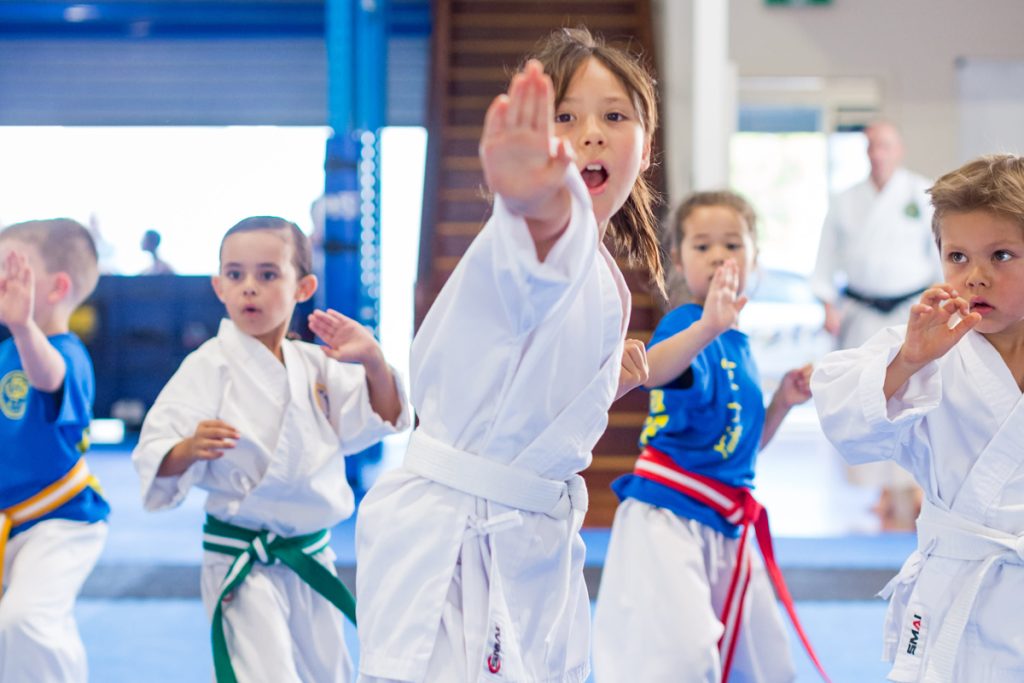
Choosing an after-school activity can be harder than it looks. Your child may enjoy sport one week and lose interest the next, or feel nervous about joining something unfamiliar. You may also wonder whether martial arts will be too demanding or competitive.
Children’s martial arts can provide a structured way to introduce regular movement, skill development and goal setting. The important thing is finding a programme where your child can learn progressively, receive suitable guidance and feel comfortable participating.
What Does Martial Arts Training Involve for Kids?
Children’s martial arts is more than learning how to kick or punch. A structured programme can introduce movement, basic techniques, physical conditioning, partner work and rules for safe, respectful training.
Shobukan Martial Arts publishes age-specific classes, with beginner, intermediate and advanced options available within most age groups. Its Karate Kids programme uses regular in-class and formal assessments to give children clear goals and a sense of achievement.
For a beginner, the first stage is learning how the class works. Children may practise basic stances, movements, techniques and combinations while learning to listen and work appropriately around other students. Instructors can correct a child’s stance or technique so they understand what to change.
Children do not need to arrive already fit, coordinated or confident. A suitable beginner class should give them manageable skills to practise, repeat and gradually improve.
You can explore Shobukan’s children’s martial arts programme when comparing options for your child.
How to Choose Martial Arts Classes Near Me
A search for martial arts classes near me is a useful starting point, but distance should not be the only deciding factor. For families in Gosnells and across Perth, consider whether the class suits your child as well as your weekly routine.
Look at the class environment. Are beginners given clear guidance? Is the teaching approach structured? Can children progress according to their ability without feeling pressured to keep up?
Consider the instructor’s approach too. Children learn differently, so patience and clear communication matter. A good class should make expectations understandable and give children time to practise rather than rushing through techniques.
Convenience matters as well. A programme that is difficult to reach or clashes with family commitments can become hard to maintain. Regular attendance is easier when training fits realistically into your routine.
One factor parents sometimes overlook is progression. A child may enjoy the first classes because everything is new, but continued interest can depend on having the next achievable goal. Ask how beginners progress, how assessments work and what children can expect as their skills develop.
For local options, Shobukan’s martial arts class information for Perth and Gosnells provides another useful starting point.
What Can Children Realistically Gain?
Martial arts can support several areas of development, but results differ between children. Age, personality, consistency and the quality of instruction all influence what a child gains from training.
Physical activity is an obvious benefit. Practice can involve movement, balance, coordination and fitness. Children also learn to repeat techniques carefully, reinforcing the idea that improvement comes through practice.
There can be benefits beyond fitness. Following instructions, remembering sequences and waiting for a turn require attention. Working towards a grading or training milestone can introduce goal setting and persistence.
Confidence is another common reason parents consider martial arts. It is more useful to view confidence as something that can develop through repeated experiences of learning and improving. A child who struggles with a technique, receives guidance, practises it and eventually performs it more accurately has experienced visible progress.
That is a more realistic measure than expecting martial arts to automatically change a child’s personality or behaviour.
Why Local Training Can Matter in Gosnells
For families considering martial arts in Gosnells or Perth, local training can make consistency easier. When a programme fits your normal routine, attending regularly can be more practical during busy school weeks.
Shobukan Martial Arts has been teaching martial arts since 1974, according to its website, and offers programmes for children, teens and adults. Its published information also describes a friendly, safe and positive training environment and age-specific beginner classes.
When comparing local schools, look beyond marketing claims. Read the programme information, ask how beginners are introduced, understand progression and consider whether your child would feel comfortable in the environment.
The right choice is not necessarily the school with the biggest promises. It is the one where the programme, teaching style, location and expectations make sense for your family and your child’s needs.
What Should Your Child Expect at Their First Class?
Knowing what happens can make a new activity less intimidating. While every class varies, parents can generally prepare their child for a process like this:
- Before the first class: Check what the school recommends bringing and whether an introductory session or registration is required.
- Arriving at the dojo: Give your child time to settle in and observe.
- Meeting the instructor: Basic expectations should be explained clearly.
- Warm-up and movement: Simple exercises prepare children for training.
- Beginner techniques: Basic techniques are introduced progressively through repetition.
- Training with others: Children learn to share space, follow instructions and show respect.
- Ongoing training: As skills improve, training becomes more challenging, and goals develop.
- Belt grading: Grading provides a structured way to assess progress. Shobukan states that its Karate Kids programme uses regular in-class and formal assessments to promote a sense of achievement.
There is no need to focus on how quickly your child reaches a particular belt. Early progress is better judged by whether they understand the basics, participate safely and become more comfortable with learning.
Frequently Asked Questions:
The right starting age depends on the child and the programme. Shobukan publishes beginner classes for children aged 3–4, 5–6 and 7–12, plus programmes for teens and adults. Parents should consider whether their child can follow simple instructions, participate in a group and manage the class environment.
Beginners generally start with fundamental movements, basic techniques, class rules and safe training habits. Children also learn to listen, practise repeatedly and work appropriately around others. Shobukan offers age-specific beginner programmes, allowing the starting point to be matched more closely to a child’s age and level.
What children should wear can vary between schools and introductory sessions. Before attending, ask what clothing or uniform is required, whether footwear is worn on the training floor and whether your child should bring water. Confirming these details directly is better than assuming every dojo follows identical requirements.
There is no single schedule for every child. A practical routine is one your family can maintain alongside school, homework and other activities. Regular attendance gives children more opportunities to practise and remember techniques. Ask the school what training frequency it recommends for your child’s age and programme.
Belt grading is a structured way of recognising progress in martial arts. Requirements vary between schools and levels, so ask what skills are assessed and how children prepare. Shobukan states that its Karate Kids programme uses regular in-class and formal assessments to help children work towards goals and experience achievement.
Take the Next Step With Shobukan Martial Arts
If you are considering martial arts for your child, the next step does not have to be a major commitment. Ask practical questions about age groups, beginner training, class structure and progression. Families in Gosnells and Perth can explore Shobukan Martial Arts’ children’s programme and local class information before deciding. When you are ready, call Shobukan Martial Arts on 08 9309 1444 to enquire about suitable children’s training and discuss how your child can get started.